Special Deschutes Taps for July

Last evening, Saraveza Bottleshop & Pasty Tavern hosted a special evening with Deschutes Brewery with some refreshing seasonals to help beat the heat. Unfortunately, a Berliner-Weiss-style beer mentioned earlier on was not yet ready for drinking so was not on hand. Deschutes representatives Brian Saxton and Mike Foy said the brewers were not yet ready to release the beer until it had properly aged. Still, a few other quaff-worthy brews were pouring, including the Sagebrush Pilsner and the Miss Spelt Bavarian-style Hefeweizen. The Miss Spelt has been in Deschutes’ test market for a while now, and the brewery is currently gathering feedback from consumers to decide what changes, if any, need to be made before this beer joins Deschutes’ heralded bottle lineup. Following The Dissident Flanders-style ale and a previous 20th Anniversary Wit, this will be their third bottled Belgian-style ale when and if it is released. The prospect seems promising considering the beer is both quite drinkable and complex, with phenolic notes of clove and banana indicative of the style.

In other Deschutes news, we recently discovered the Portland pub’s calendar is set to tap a different Reserve Series beer everyday from Friday July 16 through the commencement of the Oregon Brewers Festival on Sunday July 25. And, yes, we’ve got the list. It reads as follows:

Friday, July 16th     Sinfully Delicious DSA
Saturday, July 17     The Dissident ’08
Sunday, July 18     Mirror Mirror ’09
Monday, July 19     Black Butte XXI
Tuesday, July 20     Frosty the Snow Quad
Wednesday, July 21     Quadsimoto
Thursday, July 22     Jubel 2010
Friday, July 23     The Abyss ’09
Saturday, July 24     St. Ryan
Sunday, July 25     Black Butte XXII

As for the Berliner-Weiss-style brew, we’ll be keeping our eyes peeled for that one. See you at Deschutes!

  • Share/Bookmark

Posted under Oregon beer, beer awards, beer releases, brewpubs, places to drink beer

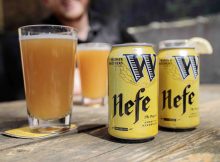
Pyramid Hefe in a Can

Haywire 16oz can

From Pyramid Breweries:

SEATTLE, WA – April 27, 2010 – The standard by which all other wheat beers are judged is making an informal summer tour beyond the tap and bottle. Pyramid Breweries introduces its gold medal Haywire Hefeweizen in a limited-release 16oz can. Available from May – July, the new package offering presents a tower of refreshing wheat ale that’s sized for a thirsty time of year. Versatile and easy to chill, the new Haywire can is perfect for warm weather adventures and gatherings where glass need not tread.

“A beer this good deserves to go anywhere,” said Mike Brown, Commissioner of Inspiration and Aspiration for Pyramid Breweries. “Backcountry camping, paddling trips, music festivals, golf courses. Haywire in a can is ideal for all the places Pyramid drinkers celebrate summer’s best in the company of great friends and great beer.”

Haywire is a deliciously deranged American-Style Hefeweizen and an award-winning take on the Bavarian classic. This refreshingly unfiltered wheat ale delivers a distinctively smooth flavor worth sharing with friends. At the 2009 Great American Beer Festival – the largest national beer competition recognizing the most outstanding beers produced in the United States today – Pyramid’s Haywire Hefeweizen was awarded the gold medal for best American-Style Wheat Beer with Yeast.

HAYWIRE HEFEWEIZEN

Availability:

May – July, 16oz can

Style: Hefeweizen

Malts: 2-Row, Malted Wheat, Caramel

Hops: Nugget and Liberty

ABV: 5.2%

IBU: 18

The 16oz Haywire is a tall can for a short season, and can be found exclusively in the Seattle and Southern California markets. Joining the vast line-up of ways to enjoy Haywire – on draft, in 12oz bottles (available in 6-packs, 12-packs, and in all Pyramid Variety packs) and 22oz bottles – Haywire cans will be available for sale in 4-packs at major retailers.


  • Share/Bookmark

Posted under beer news, press releases

This post was written by Angelo on April 27, 2010

Tags: , , , , , , , ,

Going Coastal with Pelican Brewmaster Darron Welch

Pelican Brewmaster Darron Welch

Pelican Brewmaster Darron Welch

Brewpublic ventures out to Pacific City to visit Pelican Brewery, where brewmaster Darron Welch talks about life in coastal Beervana, the award winning beers of Pelican, his love for craft beer, and an exciting new bill legalizing self-distribution of beer in Oregon.

One of the finer plots of coastal land in Oregon is that of Pacific City. With magnificent sand dunes rolling amidst a forested backdrop and majestic views of the imposing Haystack Rock, the winding roads leading in to the town are “a double-edged sword” explains Jeremy Strober of an area development group called Kiwanda Hospitality Group. Strober explains, “While is keeps this area a hidden gem, a secluded piece of paradise, it also makes it hard for businesses to survive in the winter time.” Just a few miles off Highway 101 between Lincoln City and Tillamook, Pacific City offers touring attractions of great surf, turf, and phenomenal beer brewed at Pelican Brewing Company. High prices are justified by a dramatic swing in seasonal business. A large majority of tourism dollars derrived in Pacific City comes during the height of the summer and judging by our last trip there in late June, the hefty cost of hospitality was hardly relating to any slowdown during the country worst economic hardship in years.

The beers of Pelican have won boatloads of awards and the brewery itself has been recognized at the Great American Beer Festival as the country’s best brewery of the year twice. With a recent expansion in 2004 the brewery increased production to about 1500 barrels annually making it fall in the category of a large brewpub. If you’ve ever had the piquant India Pelican Ale, the robust Tsunami Stout, or the one of a kind Doryman Dark Ale, you can understand how spectacular this little 15-barrel brewery is. So is $5.50 a pint and $6 for an imperial (20 ounce) pint too much to ask for in these tough times? “Certainly I do get that feedback with our bottled IPA. We price it so that we’re actually making a little bit of money” said brewmaster and partner Darron Welch in a recent interview. Welch, Pelican’s original brewer is the man responsible for much of the recipe development at Pelican. “When we sell it to the distributor, the distributor needs to mark it up. The retailer needs to mark it up. So we do get feedback about ‘Why is your bottle of IPA $7.00?’ It’s an expensive bottle of beer. I think when we’re able to distribute it ourselves, we’ll see that price go down a little bit.” Welch continued “I’ve always admired what Jack Joyce has done with Rogue. He’s always had this philosophy that ‘We’ve got really good beer and it’s worth paying for. We’re going to charge a price that we feel is fair.’ And, honestly, they’ve had a lot of success with that. I hope that we’re able to replicate that in a small way.” In addition Welch joked “Plus you have this exorbitant head brewer’s salary that you’ve got to pay.”

Self-Distribution

Not all Oregon state bills regarding beer are bad. Despite some politicians trying to squeeze craft brewers for big taxes, a few bills actually serve to benefit the craft brewer making his or her livelihood from within the brewpub walls. “We had a lot of support on this issue.” said Welch “We had a lot of support from the Oregon Brewers Guild board of directors, from folks like Ben Love (Hopworks Brewery), Van Havig (Rock Bottom), and Jamie Floyd (Ninkasi), just to name a few. Other brewers that were really pushing for this and needing this: Roots Brewery gave us a lot of support. The Wild River group gave us a lot of support. Multnomah Brewery. We got a lot of support from the McMenamins group.  They’re called 10 Barrel now, but they used to be called Wildfire-they’ve been hugely supportive as well as Silver Moon, also over in the Bend area. We got support from Cascade Lakes Brewery. And just a lot of support for this issue from brewpub membership as a whole.”

Obviously this is a big deal and everything will be changed from here forth. Before the self-distro law took effect, Pelican was limited to Mid-Willamette Valley, primarily Portland. Said Welch “(F)or bottled beer our India Pelican Ale is distributed in Portland, as well as the populated coast. 99% of our distribution was through Portland. The coast here doesn’t take very much beer. The number of specialty stores is just (places thumb and index finger very close together).” As for seeing kegs of Pelican on tap in the Portland area again, Welch said kegged beer will not be the focus of distribution. “You may see one here or there” said the brewer.  Being in a secluded area during the winter months “means the brewery doesn’t have a steady business volume to depend on” according to Welch. “I think that’s a huge difference from being in a place like Eugene or Portland where you have this base of population, you reach your customers and they keep coming back” he said. “They come back in December, they come back in February, they come back in the summer, they comeback all year long!” The majority of sales for Pelican are in July and August, like most of craft brewers in the state, but on a much more dramatic scale. “It’s like a madhouse here and then, all of a sudden, it’s like you can hear a pin drop in January” said Welch. “After thirteen years, we’ve figure out one or two things. We wouldn’t still be here if we hadn’t learned to make some adjustments to survive. Our business model is truly a feast or famine”

This yo-yo of a business model will likely be supplemented by the new self distribution law that will allow for breweries like Pelican to forgo employing a distribution company in selling their beers to retailers. Optimistically, Welch admits “If we are the ones driving the truck, calling on accounts, and making those contacts, and pushing those sales, then we’re in control instead of the distributor. It’s their job to sell as much beer as possible. When people in the summertime buy more beer, that’s what they want to do. But in the summertime, we’ve got all we can handle (at the brewpub). And what we need to do is offset our seasonality. By self-distributing our beer, we feel we have a little more control over that and we’re not going to be pushing product and posting things off in the middle of the summertime when we can barely keep up as it is. But come December, January, February, we’ll probably have something on post off every month. In fact, we’ve already written the post-off plan, so I can tell you that we will be posting something off every single month during those winter months to drive sales. And since we are deeply staffed, our guys can be out reaching accounts and building sales in the off-season.” In the early days of Pelican, Welch says the difference between the peak and lowest production months was 400%. “That was pretty tough to manage” he said. Nowadays those numbers are down to only about a 100 or 150% differential. “If we had constant demand, we’d probably be producing 3000 barrels per year” said Welch.

More on Pelican

Up until 2004 the brewery was just a cramped little strip adjacent to the restaurant, a run down old pizza joint with blown sand covering much of the roof. Since Pelican and company took over the property, quite a bit has changed. The look and feel of Pacific City has undergone a dramatic face lift over the past decade.Once a somewhat desolate fishing town, the driving force behind today’s economy here is tourism. Time share condominiums were built on the dunes overlooking the ocean in 2007 and much of the look and feel of the town seems quite different from much of Oregon. The Pelican Brewery hosts the annual Brewers Summer Games each June where industry craft brew folks test their athleticism and enjoy the great bounty of beer the Northwest has to offer. Pelican, is just another shining example of why Oregon is the best state in the country for beer.

More on Brewmaster Darron Welch, his passion for beer, and what’s coming up from Pelican

“When I was a young man, I took a year off between high school and college. I had an opportunity to live overseas and I just couldn’t pass it up. I was an exchange student in German. When I left, I thought I liked beer. When I got to Germany, I realized that I was completely mistaken. I actually loved beer. It just had to be great beer. When I came back (to America) I was, of course, disappointed with the regular issue American beer that was available in the mid-80s. So, I’d heard of homebrewing so I thought I’d homebrewing because I thought the worst thing that can happen is that at least it will still have more flavor. It may not be perfect beer, but it will still have more flavor than what’s commercially available. So, I took up homebrewing, and my father was instrumental in that because I was still under 21. So he would go and buy the ingredients and I would make the beer. Half of it was his and half of it was mine. That was a good deal for everyone involved. I did homebrewing all through college and my first career. I got to be a pretty accomplished homebrewer. When I was out in Wisconsin for my previous work life, I had an opportunity to sign on at the local brewpub so I did. So, that was my jump into the ranks of professional brewers. It’s funny, the beer that really opened my eyes…there were actually two beers…that opened my eyes to the potential of flavor in beer and the qualities that a good beer could have. That was a good German Pilsner and a South German Hefeweizen. Neither of which I brew (laughs). For Welch his previous attempts at brewing a Pilsner for Pelican sold slowly and took longer to ferment. “I am happy to see Hopworks making some headway in making some top notch lager in the Pacific Northwest” he added. “As far as craft beer goes, this has been a lager-free zone. There’s been lots of us trying to get people fired up about lager, but so far, not a lot of success. My trouble is, I have time to brew a Pilsner in the winter. But when people really want Pilsner is (in the summer). It would be fun to have a lager strain going and enough tanks to dink around with it…do a Dortmunder, do a Pilsner…”  Pelican will be brewing their special Saison this month and packaging it in early August for release in early September. Look for it in 750 ML bottles.


  • Share/Bookmark

Posted under Beer personalities, Oregon beer, brewpubs

Interview with Larry Sidor, Deschutes Brewmaster, Part 1

Deschutes brewmaster, Larry Sidor, has a background that may surprise some. For someone who has come up with such boldly innovated recipes at Deschutes such as The Dissident and The Abyss, many may not guess that Larry got his start at the Olympia Brewing Company.

“I spent 23 years at Olympia. You name it I did. It started as a journeyman situation after I graduated from OSU with a degree in the food sciences. From there I did a six-month brewing apprenticeship and performed every aspect in brewing possible. After that I was sent to Siebels, and back at that time it was a four-month course. When I returned I was named project assistant brewmaster at Olympia.”

From there Larry was promoted to Operations Manager for the entire brewery and during that time Pabst bought out Olympia. Larry remained with the company and became the R&D Manager, QA Manager, wrote and developed contract brewing situations and even brewed in Japan and China. Larry brewed such brands as Stroh’s, Lone Star, Lucky Lager, Brew 102 and even the Beer Beer (the can just said “Beer” on the side) and of course all the Pabst’s Brands.

In 1997, Larry quit his position at Olympia/Pabst without another job lined up. He confessed that he had had enough of the revolving door of ownership. Recently, I had a chance to meet with Larry and talk about his past, where he is at now and how he sees the future of craft beer.

Margaret Lut: So how did you transition from Olympia to Deschutes?

Larry Sidor: Well, I am an Oregon boy. At least a Northwest guy. I love it out here. I grew up in Corvallis and spent my formative years in La Grande. I ended up going back to Corvallis and graduated from Corvallis High and then went to Oregon State University. When I quit Olympia without a job and went home to my wife and told her and she was like “OK, that is nice” “She was completely OK with it. So I starting looking around for a job and a hop dealer in Yakima offered me a job and I thought “Oh that sounds great! I have always wanted to learn more about hops.” I ended up spending seven years in Yakima in the hop business. I worked in technical sales and operations of pelletizing hops. One of my greatest accomplishments was pretty much revolutionizing hop pellet production. I made a lot of changes to improve pelletization and starting running a super critical carbon dioxide plant that extracted the essential ingredients in hops. Then it was put in a can. Not very glamorous but very interesting from a technical standpoint.

Here at Deschutes, I use a little bit of hop extract here but we are a whole hop user here. Occasionally I might use a pellet or two but only when whole hops aren’t available for what I want to do. While working at the hop farm someone from Deschutes called me and asked if I was interested in getting back to brewing. My response was “OK, when is the interview?” So I came down for the interview and it was right in the transition of getting ready to open this brewhouse (Bend production brewery) and it was really like the perfect fit.

Oh, here is another great story of how I decided Deschutes was the right choice:
I was looking through (different beers) my beer fridge and I was thinking, ‘Wow they use whole hops. They use whole hops. They use whole hops.  Hmm…they use pellets, but I’ll forgive them” and it occurred to me that I am naturally drawn to beers made with whole hops. I can notice the beers that are made with pelletized hops and those made with whole hops and I lean towards those beers made with whole hops. So when Deschutes called me up I was like well I always have Deschutes beers in my fridge. It is funny how you kind of go down a path that you don’t really know you are going down until you open up that door on the beer fridge and you go “Oh wow … whole hops!”

ML: Before you came to Deschutes were you brewing or home brewing in Yakima?

LS: No, I copped out. I bought a vineyard and starting making wine. When I was looking for a place to live in Yakima I found a place that had 3 acres of wine grapes. When I was at OSU I interned at a winery and it was my dream to someday own and operate my own vineyard. I sold most of the grapes to other vineyards and legally you can make 200 gallons of wine a year so that is what I would do (three whites and a red) and it was awfully fun. I would call up my friends and they would come and we could have a big spread. They would bring their campers and it would just be this big gathering of folks. I soon realized that my food bill was bigger then what it would cost to hire commercial pickers. So the following year I hired commercial pickers and people were like “What are you doing?!”. So the year after I would have people waiting in the parking lot waiting for the grapes to ripen for harvest.

ML: Having a winemaker’s background (temporarily) how did that transition into brewing? Did you bring your winemakers background into brewing, as far as the Dissidents or anything else?

LS: Absolutely, but I really bring more of my experience of brewing at Olympia and I also bring a whole load of information and technique from my days in the hop industry. I mean, I know more about hops then I care to admit. I spent seven years just living the dream of working with hops. So I am connected with the hop industry from a technical research stand point and from knowing growers and basically knowing how the system works. For example, you know the latest hop shortage, well guess what; we had no hop shortage here. In fact, we actually sold hops back into the brewing community to help them out. For us, the shortage was no big deal. I have a hop contract for the next 5 years already planned.

As for wine making and how it has helped me out in this job. The barrel information I had accumulated from wine making has helped. We get barrels from Hedges Cellars, his brother used to be my chemist at Olympia. So when I need grapes or wine barrels they are always there for me. A good friend of mine owns King Estates, east of Eugene, so you know, same thing. Through out the industry, wine and beer are kind of woven together. There is this great sharing of information between ex-beer guys that are now wine guys and vice-a-versa. So the two vineyards I mentioned, they have about 15-20 year careers in the beer industry so they understand the beer industry and so now they have 10 years of wine making under their belts and it is pretty good to be able to share that information.

Winemaking is fairly simple compared to making beer but wine growing is very complex. So I think that the agronomics of growing wine grapes is the most technically challenging part of making wine. If you look at beer making, we go from a very light Kolsch-type beer to a very dark Imperial Stout like Abyss and the wine folks can’t claim that. They play in this little flavor profile here and we have flavors that will just blow you away. That is why working with Brett or Acetobactor or some of the other funky yeast is just amazing. We can layer those flavors in our advantage where the wine makers can’t really do so. The wine consumer has a very close mine where the beer drinkers, especially those who like the The Dissident, The Abyss, Black Butte XX, etc. are like “Bring it on!” We don’t have limitations like the wine industry does so it is pretty rewarding and pretty darn cool. We can go play while they have to labor.

ML: When did you know craft beer was your path?

LS: I live to make beer. When I was in Olympia, and I know people don’t think this is right but they make great beer. They had great processes and it was a fun, entertaining, and wonderful place to work. I had a lot of creative outlet there, definitely not anywhere close to here, the yellow fizzy beer consumer was pretty picky and you couldn’t go too far out but one of the fun things I did at Olympia was I made a beer called Olympia Dark. I went from making it once a beer to making it year round. At Deschutes there is no boundaries. The boundaries we have are how do we get it done.

A focus project I am working on right now is making a Belgium Quad. We have made them off and on over the past few years and right now we are on batch number four. We have yet to make one that we are proud of.

ML: Which was the batch at the Portland Cheers to Belgium Beers?

LS: That was batch number three. For me what it was missing was the layering and the complexity of what I really wanted. The yeast we had to use, well…. We had some problems with that yeast. Once we figured out how to use it though, it was one of those situations where the horse was out of the barn type things. It was a great learning experience. Stay tuned, when you are at the Oregon Brewer’s Festival this year, they are having a Buzz Tent. We have three beers we are going to contribute. An Organic Sour Amber Ale, it’s going to be fairly hoppy and I will be curious to hear what the feedback will be on this one. For the buzz tent we will have a quad that has been aging in 14-year old bourbon barrels and for the event itself we will have a beer called Miss Spelt. I am very enthused with the Miss Spelt. I don’t think it will take the beer bloggers by storm or anything, it is not meant to be that kind of beer. It is meant to be a more full-bodied wheat style beer made with spelt that has notes of banana, clove and bubble-gum. Spelt is an ancient grain that has a very unique cereal flavor to it. When I first started brewing it, I used 50% spelt and it was way too much. It tasted like liquid bread. Since then we have cut back to where it is now and I don’t think I will mess with the formula anymore. One of the keys in making that beer for us has been how to manage the fermentation. We think we are there.

ML: Is this going to be Deschutes “Hefeweizen”?

LS: I don’t think we are going down that pathway. I think it is its own unique beer. We have never had ambitions to get into the Hefeweizen game. There are no spices in it so we are not trying to do the Belgium Wit type thing either. We are trying to let the yeast speak for itself really. We don’t want to call it a Hefeweizen, so we are messing around with some concepts. When you asked about creativity and this will make some people mad, but I don’t even look at style guidelines. One of my most anguished days is entering beers in the Great American Beer Festival. We simply don’t fit into the beer judging guidelines for most any beer that we make. I don’t really pay attention to it, it doesn’t really matter to me. We can call something a Pale ale or a Porter, Stout or an Imperial Stout but for example we make a beer called the Red Chair IPA and we call it an IPA because we don’t really know what else to call it. There are people out there that want to identify with a particular style. Red Chair is not really a Pale and it is not really an IPA, its just good beer. I think that from a creativity standpoint we are definitely doing the right thing. Maybe from a consumer confusion point we need a little education. But I like the way we do it. We strive to make a great beer for the consumer and we struggle putting a label on it or a verity or brand.

Another project I am working on right now is a gluten-free beer. I got a call from one of my brewers and he went “Larry, I don’t even want to call this beer gluten-free. I just want to put it out in the pub and call it beer. Larry, you can put a tag on it but I don’t want to call it gluten-free.” And I said, “Wow, you are that proud of that beer that we can do that.” And he said “Absolutely!” (That beer is the gluten free Wiess beer and it is on tap at the Portland pub as of this past weekend.)

ML: Do you have any beers that have inspired you along the way?

LS: Oh, there is a long list! Bridgeport IPA is a great IPA and the first time I ever tasted Black Butte Porter that was a turning point in my brewing career. A lot of the Belgium beers are just…. Wow. The Westmalles, to the Westvelterens, they are just incredible beers that make you wonder how did they do that. Some of the beers out of Germany and Pilsner Urquell were very inspiring beers for me back in the day and Guinness. I was in Germany in the early 1970′s and the beers of Munich were just amazing. One my more recent experience was going to Bamberg and visiting Schlenkerla and having their smoked beer. Their rauch beer was just incredible. Every place you turn in the beer industry there is inspiration. Someone is making fantastic beers, just waiting to be discovered. I back to the CBC and went to where Brooklyn beers are made and Cooperstown and Ommegang and Allagash and had some fantastic beers there. Inspiration is everywhere. We could talk for days on that subject.

ML: So what do you enjoy drinking these days?

LS: Allagash and Russian River just to name a few.

When I go out I don’t want to drink Deschutes, I know what it tastes like and I am not out to do QA to see if the beer traveled well or not. I want to try other brewer’s beers and see what is out on the market. I end up ordering some samples and analyzing the beers to the point to where I know the server gets frustrated with me and wants me to just decide what to drink.

Although, I will never pass up a chance to drink Dissidents or Abyss. I think Red Chair is a revolutionary beer. The marriage of malt and hop aroma and hop flavor without the rip your tonsils out type of bitterness that usually has to come with those kind of beers. The hop aroma in that beer just keeps coming back as you drink it. Where with bitter backwards beer that is somewhat unbalanced from a malts stand point, the brewer has gone way to far with the bitterness approach because they think that if it is bitter that people will like it.


Stay tuned for the second part of the interview where Larry tells of his passion for hops, Salmon Safe not organic hops and trends he sees coming to brewing.


  • Share/Bookmark

Posted under Beer personalities, Oregon beer

Rob Widmer Interview, Part 4

Last time we left off in our interview with Rob Widmer, we were talking about Widmer’s relationship to Craft Brewers Alliance and Anheuser-Busch (now owned by In-Bev). Here we continue and touch on the history behind Widmer’s relationship with the Oregon Brew Crew and their Collaborator series. We also get some insight to the latest trends in craft brewing.

Perhaps the problem many craft beer folks have with large breweries like A-B is the marketing of their products. Obviously, business is the bottom line, but on one hand they slight craft brewers for producing foofy, hoppy, fruity, fancy beers, crazy brews. On the other hand offering alternative brands like Belgian wits, fruit beers, and a “craft” line-up under alternative labels like Michelob amber etc…

Rob Widmer: It seems schizophrenic. It’s funny. Within that company, I think they’d admit that, too. They’re trying different things. We do crazy stuff here, and we’ve tried different things, and we market. It’s the business side.

Do you like Budweiser? Do you drink their lager?

RW: The only beer that I don’t really like are the ones with some infections that really bother me. But I kind of see it as “the right tool for the right job” and there’s some times when Bud tastes great and I’m happy to have it. I mean, I drank a lot of it when I was in college and even before then. So, I don’t have any problems with (Budweiser). As long as the beer is well made and clean… Honestly the beers that I have troubles with are a lot of the very expensive imported beers, big beers that are old, beat up. I am very much a fresh beer person. I definitely agree that there are some beers that benefit by some aging, but I’m always amazed by these vertical tastings of IPAs and things. To me, it’s like that beer died and people are oohing and ahhing over the horrible oxidated notes.

Tell us a little about the Collaborator series and how that came to fruition.

RW: It’s a very cool thing. Kurt and I were members of the Brew Crew before we were commercial brewers. We sort of lost contact with them but became kind of reacquainted in the mid-90s. Back then you couldn’t get a snack pack yeast when you were homebrewing. They weren’t available then. So we always had yeast and guys would call and say “I am going to swing by this weekend, can I get a container of yeast?” So we’d say “Sure, just bring us a couple bottles of the result” because we were curious of seeing what our yeast was capable of doing. Some of the beer that came back was awesome. And we thought “we’ve got to do something with these beers” and that is where the project was born.

And you are celebrating the Celebrator’s 11th Anniversary this fall.

RW: I tell you, all the brewers, and it has been a couple dozen of them in the last eleven years, every one of them said that going through the project was one of the best things they’ve done since they’ve been brewing. I thnk part of it, just being homebrewers, some of your friends thing “ah, that’s a nice hobby. your beer is good” and you sort of labor in obscurity. For the Collaborator brewers, they can come in, sit at the bar with their friends and get pints from their handle and say “This is my beer.” All of a sudden they’re legit, and their friends are like “Wow. You are for real” and everyone of them says they’re just so proud.

Have you tried Michel Brown’s pumpernickel bread beer that was voted for the recipe for the 11th Anniversary Collaborator?

RW: No. That is going to be interesting. The guys were figuring out how much bread that would be. So, we’ve got some work to do.

Are you going to put bread in it?

RW: Well, we are going to use some. But they’re afraid it just wouldn’t work (on a large scale). The whole project is about craziness. But they were looking at what the ingredients in it are. Maybe we can get the rye and stuff like that. So, we’ll work with the brewer to make sure he’s happy. There was a ton of rye bread.

Next topic: innovation. There’s lots of trends coming down the pipeline such as Belgian-style beers, extreme beers, and black IPAs as well as all kinds of experimental hop beers. What do you think of these trends, and are there any you are looking ahead to developing?

RW: The black IPA for the Collaborator project, the Cascadian dark ale…we actually entered it into the GABF. It was an awesome beer. But that was one that didn’t really fit any one style. I think that’s very cool. As for the whole Belgian crazy, we’re pretty pleased with our new Belgian golden and have given it a pretty prominent slot in the W Series. What we’re currently kind of pumped about, and it’s certainly not a new style, is the Summit hops in Drifter. We just think that its such a different hop. The character of it is so unusual. That is obviously why we are giving it a lot of effort. It’s been a lot of fun to sample people on this. It sort of taught me that almost every beer drinker likes the flavor and aroma of hops, they just don’t like the bitterness. (The Drifter) has a very intense flavor but is very smooth.

What about the name “The Original Drifter Pale Ale”?

RW: The name “Drifter” connotes that it is easy drinking. But the “Original” part…we really do think that there really isn’t another hop that gives that character. I took some to the Brew Crew and people loved it because it is so unusual and delicious. But I’ve had Budweiser drinkers who have had it and are like (makes disgusted face). The way we’ve run our business is by getting people to sample the beer. I’ve been present when a lot of people have tasted our beer. Usually you get (makes contemplative) “that’s good.” But when someone goes “Wow!”, you can’t fake that. And I’ve seen that a lot with this beer. It’s a subconscious thing and you can’t fake it. I’ve seen it from beer geeks and I’ve seen it from casual beer drinkers. We’re very pumped up about it of this.

It’s one of those beers that you either love or can rub you the wrong way.

RW: Jeff Alworth (Beervana Blog) said it was kind of catty. We’ve done a lot of sensory training here and when you get that pure compound, I can definitely get it. I don’t wanna say I like it, but I am all over this (beer).

I see it as kind of oniony.

RW: A lot of our guys on the taste panel taste it as oniony. For me, Cascades have always been my favorite hop. We use it on Broken Halo, Widmer Hefe…it’s in Sierra Nevada, Mirror Pond, all that, but this could very well be my favorite. I’ve just always like the character of Cascades.

…Stay tuned for part 5…

  • Share/Bookmark

Posted under Beer personalities, Oregon beer

Rob Widmer Interview, Part 2

Last time, we left off with Rob talking about Widmer’s revolutionary American Hefeweizen.  Here, we continue with more Q & A with the Bros’ co-founder and learn about more of what has made Widmer tick over the past 25 years.  Where we pick up in this installment, we are still asking him about the history of the flagship Hefeweizen.

When you created the recipe for the Hefe, did you take a look at what Hart Brewing (now Pyramid) was doing with their Wheaten Ale, one that claims to be the first full-time wheat ale on tap in the Northwest?

Rob Widmer: We were certainly aware of that beer. It’s kind of funny.  Tom and Beth Hartwell were the original owners, and we all usd to buy truck loads of malt together. All of the local breweries did.  We ended up kind of being the house on that.  We’d arrange for shipping.  Everyone would pay us and then come and get their grain or sometimes we’d run it up to (them). So we kind of knew that Tom was working on a lot of that.  I think we rolling in at just about the same time.  They knew we were going to do it, and we knew they were going to do it.

Who came up with the idea of putting lemon in the Hefeweizen?

RW: Widmer Weizen predated (the Hefe).  When we started, we were doing a filtered version only. We did an Altbier, then we introduced Widmer Weizen. In the mid-80′s, and this probably sounds crazy to you guys because the market has changed so much, but for most people, there were two kinds of beer.  There was light beer, and there was dark beer. Light not meaning caloric light, but light meaning blond, filtered.  And then dark meaning Henry’s Dark, or something like that.  Most people didn’t want anything to do with the dark beer…You couldn’t even get them to try it. And, our Altbier, while by today’s standards isn’t much darker than (an IPA), fell into that dark category.  Widmer Weizen was clear, so you could see through it. It was deeper colored than a Bud, Miller, Coors, so people were a little skeptical, but they would try it.  When they’d try it, they tasted it and they liked it. From there, The Dublin Pub, which still exists, the owner Carl Simpson who passed away some years ago, he wanted us to do a third beer for him.  We had two fermenters.  We were doing the Alt and Weizen. We couldn’t afford a third fermenter.  But we knew the Germans offered their beers filtered or unfiltered, so we just skipped filtration, and sold it to Carl as Hefeweizen. It kind of blew people’s minds, because no one had seen a beer that looked like this. So, it got people’s attention, and it still works today when we are in new markets. If you can get people’s attention, that’s half the battle.  Then, if you can get them to try it, history shows that once they’ve tried it, they like it…or at least enough of them so that we can go for 25 years.

In the early years of Widmer, what was the temperament of the craft brewing community with brewers like BridgePort and a few others-a tightknit community versus how it has changed today?

RW: Like I said, we got together and shared loads of malt.  We were all pretty darn busy. One of the first things was all getting together and going down to visit the state legislature and lobbying, first off, to allow us to brew.  So there was cooperation there. There’s always been, certainly in Oregon, a good working relationship between the brewers.  The Oregon Brewers Guild is by far and away the best and most active and most supportive guild in the nation.  It’s a always been competitive, but a testament to us always getting along. When we started, we were on (NW) 14th and Lovejoy and had no idea that BridgePort was right there on 13th and Marshall. That was by total coincidence. The kind of cool thing is that Karl Ockert was one of the first brewer back there, and so is Matt Sage. We just had lunch with them, and have lunch with them every couple of months. It’s fun to get together and reflect on the way things were…and are. I remember a while back talking to some other brewers in another state and they were like “We can’t even be in the same room together or we’d be at each other’s throats.”

On a completely different topic, how do you feel green energy fits into the operation of a brewery? Is it cost effective? Does it make sense? Or do you think the idea just correlated to marketing?

RW: I think brewing is a really green indeavor. Most of our waste is food. And good brewing practice means capturing BTU’s where you can, reusing things, conserving on water…I was at a seminar a while back, and we use about 4.5 barrels of water per barrel of beer, which I hadn’t followed until then, but happens to be a really good rate. Brewing, in general, is very clean. For Widmer specifically, about 2/3 of our beer is sold in a returnable, reusable container, which is a keg. Other brewers are the reverse of that.  The major brewers only do a small fraction of their beer in kegs. It’s almost all in bottles. Our focus has always been draught. Our bottles are all hopefully recycled. I am a native Oregonian, a native Portlander and I ride my bike to work when I can. I drive a very small used car sparingly and live in a small house because I think that’s the right was to live. Not to get too far off track (laughs), but I think a lot of the problems we’re in right now, as a society, people have been living beyond our means. Ridiculously. People expect to live in gigantic homes and drive humongous cars, and that just wasn’t sustainable. The result is what you see going on around us. Sorry to get off track… But, (with Widmer) we’ve done lots of little things. With the Gasthaus, we were one of the first on board with the Portland Compost Project. Really the only thing that isn’t recycled is some of the plastics that can’t be. We’ve greatly reduced the amount of garbage. It’s a pretty cool process.  I don’t know exactly how they were able to do it. We looked at it years ago, and to make it work then, you had to separate proteins out. This meant that the servers had to scrape certain things, but now they can take napkins, bones, meat scraps, cheese, all that..Now the only thing the servers have to separate is the foil butter pack things. So,that’s a pretty cool thing.  I looked at solar power and the only way it worked…there were humongous tax credits…I really felt flabergasted. They might have been a little screwed up by this, but the amount of power generated by their proposal was so tiny compared to the cost. Even though in five years, it wouldn’t really cost us anything, as a company.  But it costs all of us as tax payers. Willamette Week touched on it, but I have been waiting for someone to say “Wait a minute. Time out. These companies are getting this for free on the backs of tax payers, these tremendous arrays of solar panels at the tax payer’s expense, and what are they getting out of it?” The only thing really, is that you would hopefully be supporting an industry that will continue with breakthroughs where the panels become much more efficient. I was concerned that we would do this and there would be a damning article that said all these companies were really taking advantage of tax payers. It’s interesting that in Germany, where they have a huge solar power industry, the average citizen knows that currently, unless it is heavily subsidized, it really doesn’t make sense. But the average citizen there is willing to pay extra to support it because they know that if it continues, there will be breakthoughs. But here, I don’t think people really know they are paying a premium to pay for these solar panels that these companies are getting. Take away those tax credits, I bet none of those companies would do that. For us, and this still sounds ridiculous, it was a $100,000 investment that the resulting power would light about ten six-foot flourescent light bulbs for a year. $100,000! It was very compelling, because after the first year, half of it was paid for, and by year five, it was free to us, through credits.  But I was thinking, “Wait a minute…ad Rob Widmer, tax payer, my tax dollars paid for that and I think I’ve been ripped off.

You are using wind energy here, correct?

RW: We do, but not full-on. Because it is expensive.  These are lean times. But, yes, a portion of our power is through that. We’re Pacific Power, not PGE. They call it their Blue Sky Program.  It’s interesting that some of the practices we’ve done forever, we just haven’t made a big deal out of, and we are realizing that we do need to tell our story. Some of the big retailer like Wal-Mart and CostCo are asking us “Okay, before we buy from you, tell us what you are doing that’s sustainable.” So, we’re in the process, and my brother’s wife is taking this on as a project, of compiling all of the stuff that we do so when the media asks or when a customer asks…There’s now a spot on our web page, too. A lot of things have gone on, but one of the coolest things, we have a team of guys that handle our logistics, so when distributors order beer, it’s really like air traffic control. I’m not really sure how to describe it, but they make sure trucks are loaded and minimize on miles driven with empty space in the back of the truck. Through some software and just some bright people, it’s unbelievable.

Here is where the server stops by to take our order.  I opt for a Hefe. Rob was drinking one, so I figured why not. More to come…stay tuned…


  • Share/Bookmark

Posted under Beer personalities, Oregon beer

Standing Stone

The California beer road trip was almost complete.  But you can only be on the highway so long before you need to sink your palate into some craft beer.  Luckily, Ashland, Oregon is a little hub for Southern Oregon craft brews.  Caldera is a fabulous production brewery from Ashland that produces some of the best beers in the state of Oregon.  We were not fortunate enought to hit them up, but we were quite fortunate to experience and old favorite, Standing Stone.

Open seven days a week for great beer and artisan food, Standing Stone Brewing Company in Ashland is located in a historic brick building that is part of the National Register of Historic Places.  Formerly the Whittle Garage founded in 1925, the now chic environment in the heart of the affluent Southern Oregon community. 

The service was stellar, the place was immaculate, and the beer was top notch.  Standing Stone is worth your time on any travel along I-5 through Southern Oregon.  Our bartender Robin served us a wonderful sample tray of seven house beers prepared by brewmaster Adam Benson with the utmost precision.

Honey Cream Ale: A very light soapy straw colored ale with a sweet, creamy, and crisp biscuit flavor.  This soft, well-balanced session brew finished with a mildly peppered hop finish.

Hefeweizen: A hair darker than the honey cream, this wheaten brew possessed a slight phenolic banana-clove attitude in the light nose. Quite refreshing and easy drinking was this standard beer. Clean, Bavarian, delicious.

Amber Ale: A deep copper-bodied amber ale with a thick off-white head.  Crisp, malty and with a gentle hops balance, this Northwest rendition held a brisk and bitter finish.

India Pale Ale: West Coast Pale with a copper body and an off-white creamy head.  Mildly flowery with some creamy aromatics.  Soft and very approachable for those who may be skeptical of the IPA genre of beers.  Nice.

Standing Stone sample tray

Standing Stone sample tray

Nitro Oatmeal Stout: Opaque deep brown-black bodied stout with a small bubbly tan-gray head.  Roasted malt nose lingered as did notes of coffee and chocolate to develop a reference to mocha that stood out.  Quite smooth.

Wet Hoptoberfest: 200 pounds of wet Centennial hops for Willamette Valley to make this seasonal brew.  A lager brewed at ale temperatures, this copper-orange autumn hued Marzen with a creamy off-white head was in tact with a sticky caramel, nutty, and fruity nose.  Uniquely flavorful, harboring on overdone, yet a mesh of styles and Munich and Caramel malts that worked amicably.

Double IPA: Almost as light as the IPA here.  Again, a mild hops nose with a very soft bittering presence, especially for an imperial IPA.  Smooth, creamy, and approachable for those who are reluctant to jump into a hoppy beer.

While we enjoyed our wonderful beers, we noticed the classic brick and steel frame of the building with appealing wood and iron beams.  Five fermenters sat in lofts above in open view. Malt sacks were stacked in the space between the main bar area and the back open dining family portion of the establishment. Catering drinkers of all ages, Standing Stone makes two brands of their own lemonade including a ginger and a cherry variety.

Standing Stone brewpub

Standing Stone brewpub

It is no surprise that Standing Stone had accumulated a number of awards since its inception in 1996.  Perhaps the most notable is the one for the State of Oregon’s Governor’s Sustainability Focus Award for small buiness in 2007.  The brewery cuts waste and energy in a number of ways and utilizes 98% organic malt and 75% Northwest hops on top of thriving on local growers to make its beer.

Unfortunately, like many stops on our trip south, we were forced to cut our stay short and head northward from one heck of a trip.

  • Share/Bookmark

Posted under brewpubs

Weinhard’s Wins Four GABF Medals

Solid Gold

Solid Gold

Henry Weinhard’s Brewing Company, currently owned by MillerCoors of Wisconsin won four medals at the 2008 Great American Beer Festival in Denver, Colorado.  This includes a gold medals for their Hefeweizen Ale and three bronze medals for their Private Reserve (American-style lager or premium lager), Classic Dark (American-style dark lager), and Blue Boar (American-styled cream ale or lager)

The Henry Weinhard’s Hefeweizen earned top honors in the top honors in the American-Style Wheat Beer category, edging out Widmer Brother’s Brewing Company’s Hefeweizen and the White Tail Wheat from Montana Brewing Company,for the gold.

According to Keith Metz-Porozni of Lane PR, The Henry Weinhard’s classic Dark scored an accolade with a bronze medal in the American-Style Dark Larger category.  In 2007, the beer picked up a silver medal at GABF.

Henry Weinhard’s beers are currently contract brewed at Full Sail Brewing Company in Hood River, Oregon.

·

  • Share/Bookmark

Posted under beer me, brewpubs